What Are You Looking For?



Abstract
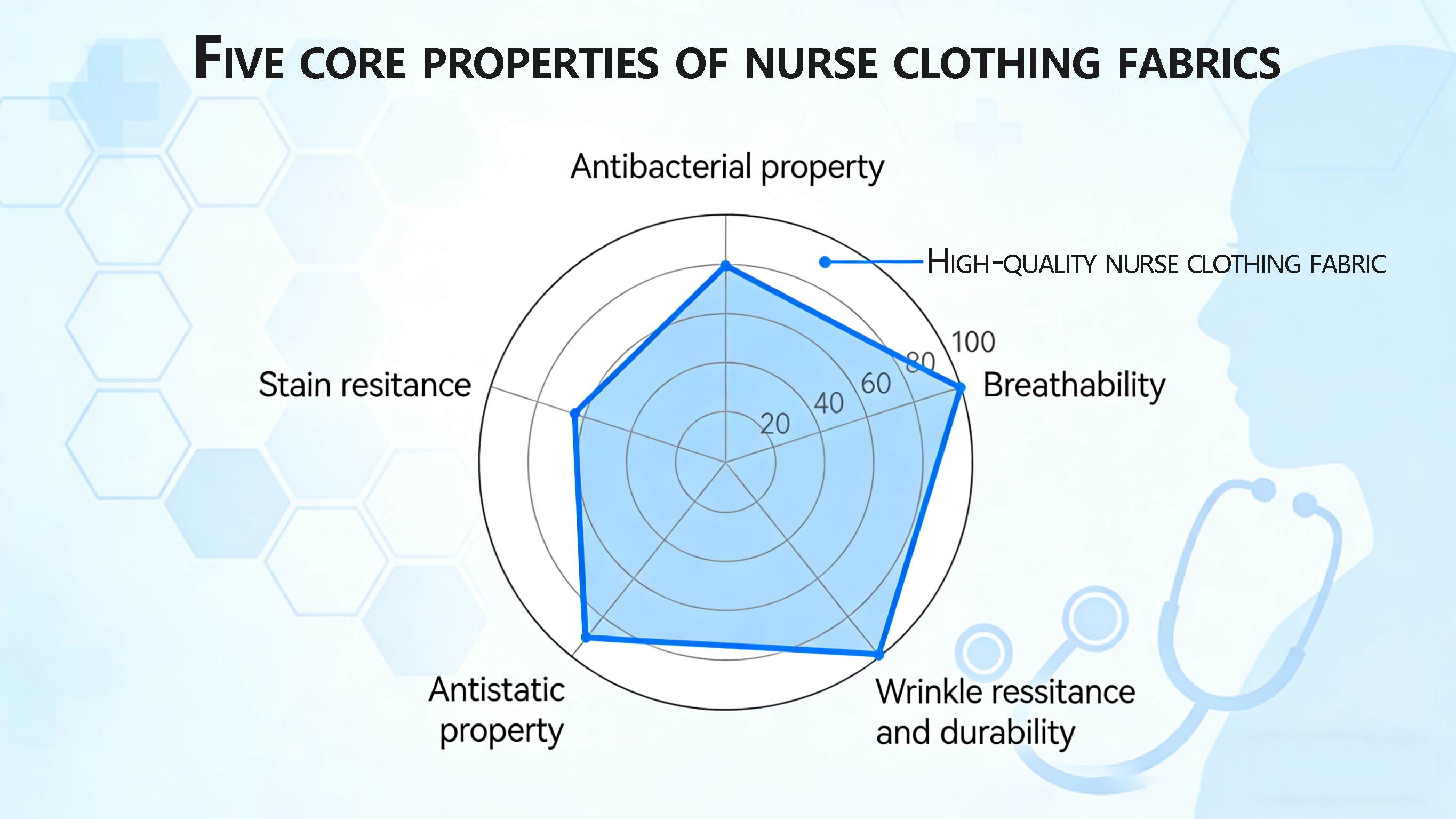
From the perspective of professional procurement, this paper systematically analyzes the five core performance indicators of nurse clothing fabrics, and compares the advantages and disadvantages of common fabric types to help you make scientific decisions in invite tenders and procurement.
Nurse clothing is the closest "comrade-in-arms" in the daily work of healthcare workers. A high-quality nurse clothing must not only reflect the professional image, but also withstand high-frequency washing, long-term wear and harsh disinfection treatment. For procurement personnel, understanding the characteristics of fabrics is the first step to ensure the quality of procurement.
I. Five Core Performance Indicators of Nurse Uniform Fabric
| Performance indicators | Professional interpretation | Typical parameter requirements |
| Antibacterial | Long-term exposure to the hospital environment, antibacterial fabrics can effectively inhibit the growth of bacteria and protect the safety of healthcare workers and patients. | Staphylococcus aureus, Escherichia coli, Candida albicans antibacterial rate > 99% |
| Breathable | Healthcare workers work intensively, and breathability directly affects wearing comfort, especially in summer. | Breathability ≥ 290-350mm/s |
| Anti-wrinkle and durability | High-frequency washing requires that the fabric is not easy to wrinkle, not easy to pilling, and has excellent color fastness. | Breaking strength: longitudinal ≥ 950N, horizontal ≥ 620N; washing size change rate ≤ ± 3% |
| Antistatic | Special departments such as operating rooms and ICUs have clear requirements for anti-static to avoid static interference with medical equipment. | Electrostatic voltage ≤ 900V, half-life ≤ 1s, electrostatic grade A |
| Easy decontamination | Common stains such as liquid medicine and blood in medical scenes, the fabric needs to be easy to clean and resistant to chlorine bleaching and disinfection. | Chlorine bleaching resistance, friction resistance color fastness > grade 3 |
The choice of fabric for nurses' uniforms is essentially about finding a balance between comfort, functionality, and durability.
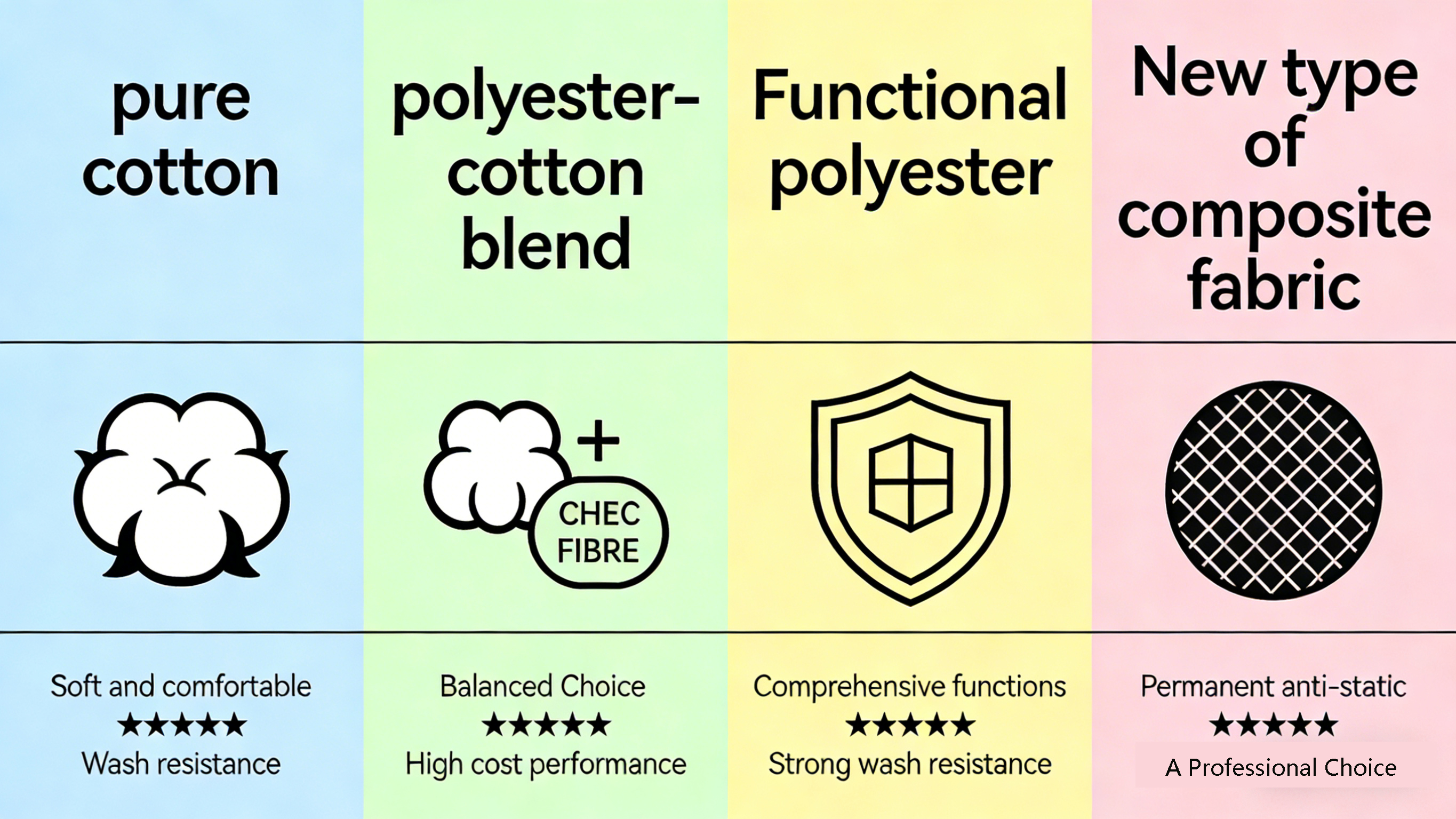
Advantages: soft and comfortable, excellent moisture absorption and breathability, skin-friendly and non-irritating.
Disadvantages: easy to wrinkle and shrink, weak resistance to chlorine bleaching, easy to harden and fade after frequent disinfection and washing.
Applicable scenarios: outpatient departments with high comfort requirements but low washing frequency.
Advantages: Combining the comfort of cotton with the durability of polyester, good wrinkle resistance, dimensional stability, and high cost performance.
Common ratio: 65% polyester/35% cotton, or 85% polyester/15% cotton.
Applicable scenarios: the mainstream choice of hospital nurse uniforms.
Advantages: Can integrate a variety of functions, such as antibacterial rate > 99%, antistatic grade A, moisture absorption and quick drying; excellent chlorine bleaching resistance, suitable for high-frequency industrial washing-2.
Disadvantages: The air permeability is slightly inferior to that of pure cotton, but it has been greatly improved through the improvement of the weaving process.
Applicable scenarios: operating room, ICU, emergency department and other departments with high functional requirements.
Company Project
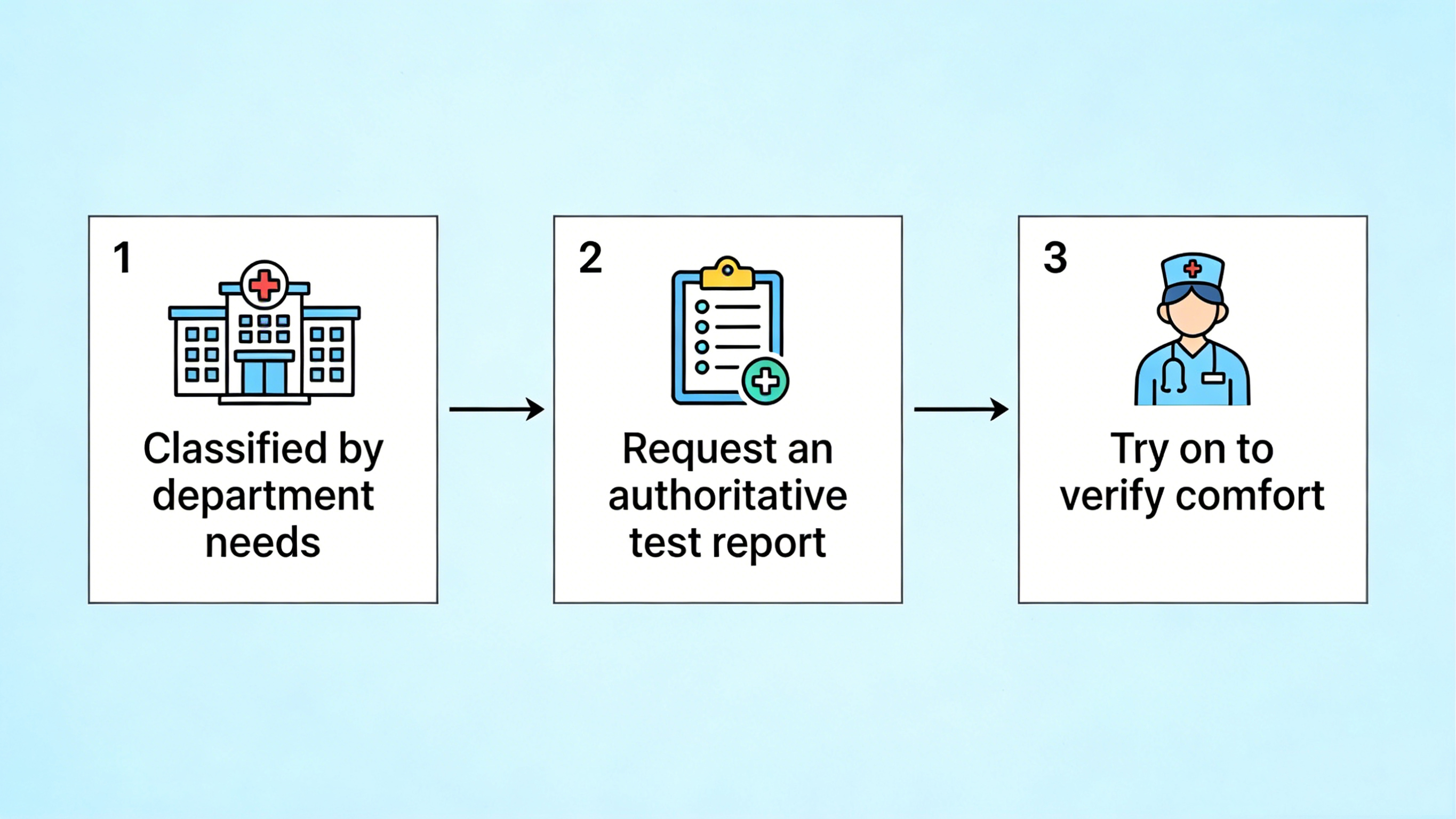
The material selection strategy of procurement expertsAccording to the needs of the department, the purchase is graded: the operating room and ICU give priority to antibacterial + anti-static functional fabrics; the ordinary ward can choose high-ratio polyester and cotton; the administrative logistics can choose conventional polyester and cotton.
Required to provide authoritative test reports: ensure that the key indicators of the fabric (antibacterial rate, air permeability, breaking strength, etc.) are supported by authoritative reports from provincial testing agencies or above.
Focusing on washing resistance: Require suppliers to provide antimicrobial performance test data after 50 washes to ensure functional durability.
Try it on to verify comfort: arrange for a nurse to try it on before purchasing, and subjectively feel the softness, breathability and convenience of activities of the fabric.
Golden Shield is not just a supplier, but also a reliable pillar in your supply chain system. We help purchasing managers improve supply chain resilience and ensure stable operations by building a solid industrial chain, transparent management processes and collaborative and innovative cooperation models.
Golden Shield - Your Reliable Supply Chain Partner
WhatsApp: + 86 133 7788 3692
Email: [email protected]