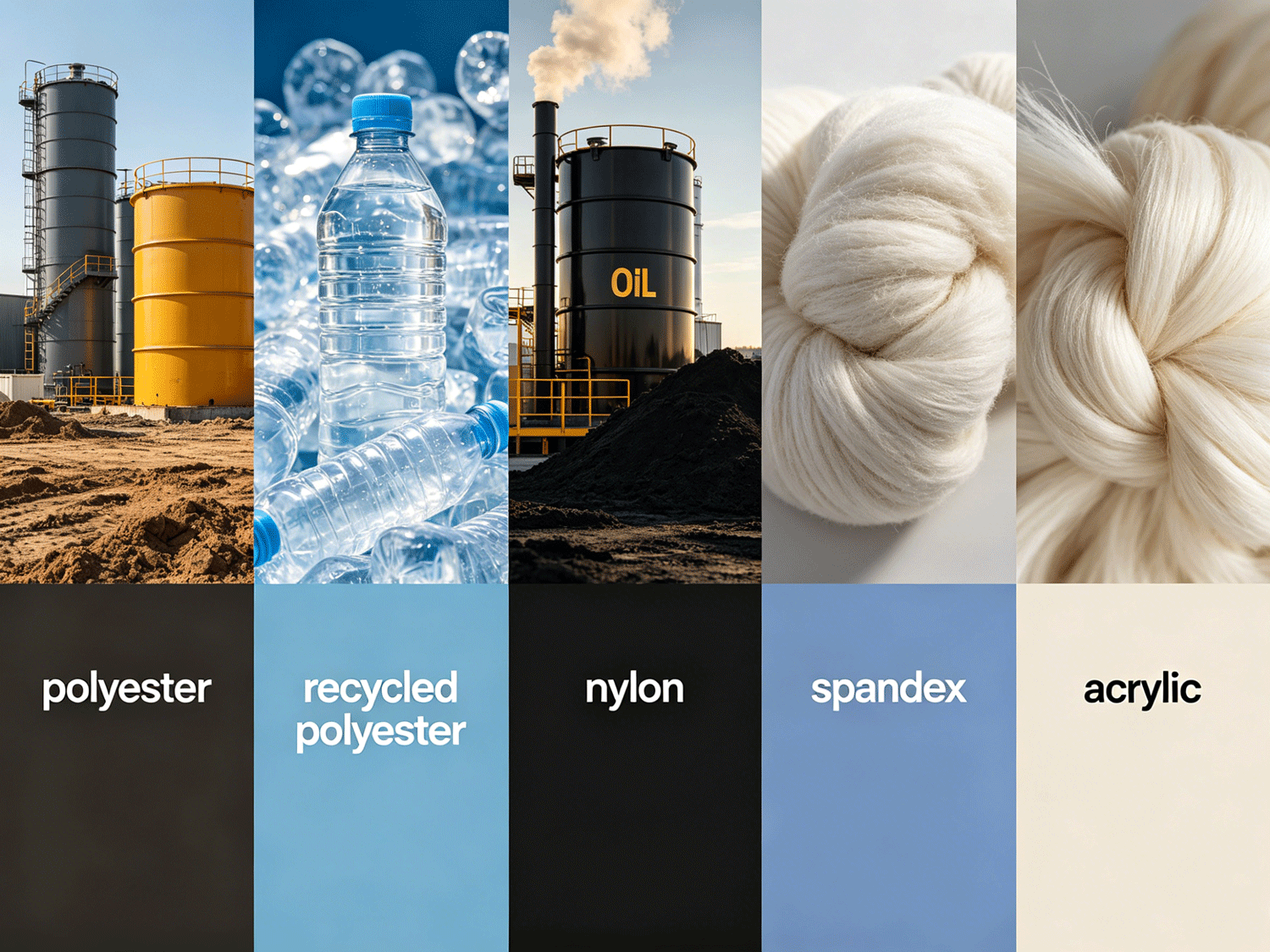
Polyester
Derived from petroleum, polyester is melted, extruded into filaments, and spun into yarn. It’s the most widely used synthetic fiber in workwear and uniforms.
Key properties: Strong, wrinkle-resistant, quick-drying, holds color well.
Golden Shield applications: School uniforms, security shirts, workwear polos.
Recycled Polyester
Made by melting down plastic bottles and re-spinning them into yarn. Identical in performance to virgin polyester, but with a lower environmental footprint.
Key properties: Sustainable, durable, same performance as virgin polyester.
Golden Shield applications: Eco-friendly uniform lines, corporate wear for sustainability-focused clients.
Nylon / Polyamide
Extracted from crude oil and engineered into strong, smooth filaments.
Key properties: Exceptional tensile strength, abrasion-resistant, lightweight.
Golden Shield applications: Ripstop tactical vests, zipper tapes, reinforcement panels in security uniforms.
Spandex / Elastane
A petroleum-derived elastic fiber that can stretch 5–8 times its original length and recover instantly.
Key properties: High elasticity, shape retention.
Golden Shield applications: Blended into nurse scrub fabrics for 4-way stretch, waistbands, fitted uniform panels.
Acrylic
A synthetic fiber designed to mimic wool’s softness and bulk.
Key properties: Wool-like hand feel, warm, lightweight, resists moths and mildew.
Golden Shield applications: Cold-weather uniform linings, knit caps, sweater vests for school uniforms.

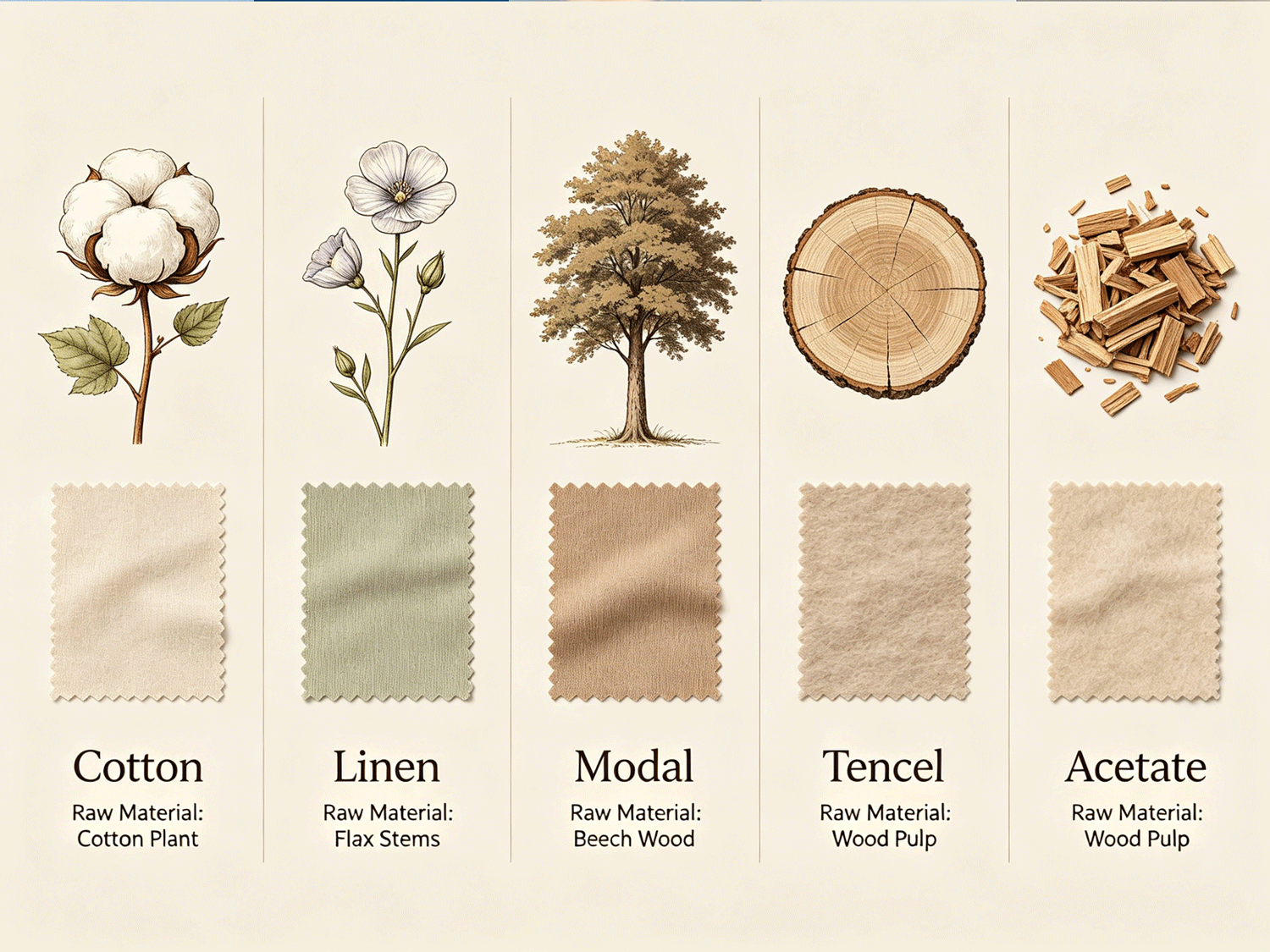
2. Plant-Based Natural & Regenerated Fibers
Cotton
Harvested directly from the cotton plant, ginned to remove seeds, then spun into yarn.
Key properties: Breathable, soft, absorbent, comfortable against skin.
Golden Shield applications: School uniform shirts, security uniform undershirts, scrub tops for hot climates.
Linen / Flax
Made from the bast fibers of the flax plant. The stalks are retted, dried, and processed into long, strong fibers.
Key properties: Highly breathable, moisture-wicking, crisp texture, gets softer with each wash.
Golden Shield applications: Lightweight summer blazers, breathable shirt options for tropical regions.
Modal
Derived from beechwood pulp, processed into a soft, silky fiber through a chemical spinning process.
Key properties: Softer than cotton, excellent drape, high moisture absorption.
Golden Shield applications: Premium inner linings, high-end scrub fabrics, comfortable undershirts.
Tencel / Lyocell
Made from purified wood pulp (often eucalyptus or beech), using a closed-loop solvent spinning process that is environmentally friendly.
Key properties: Extremely smooth, strong when wet, biodegradable, naturally anti-bacterial.
Golden Shield applications: Luxury uniform linings, eco-conscious scrub collections.
Acetate
Produced from wood pulp and acetic acid, acetate mimics the luster and drape of silk.
Key properties: Silky appearance, drapes well, good color retention.
Golden Shield applications: Uniform accessory linings, decorative ribbons, luxury badge backings.
3. Animal-Derived Natural Fibers
-
 Wool
Wool
Shorn from sheep, cleaned, carded, and spun. The fiber has a natural crimp that traps air for insulation.
Key properties: Warm, breathable, naturally flame-resistant, wrinkle-resistant.
Golden Shield applications: Blazer fabrics for school uniforms, winter security coats.
-
Cashmere
Comb from the soft undercoat of cashmere goats, not sheared. One goat produces only about 150 grams per year.
Key properties: Ultra-soft, lightweight, exceptional warmth-to-weight ratio.
Golden Shield applications: Luxury scarf linings, premium winter uniform accessories for high-end corporate clients.
-
Silk
The only natural filament fiber—silk is unwound from the cocoon of the silkworm in a single continuous strand.
Key properties: Smooth, lustrous, strong, temperature-regulating.
Golden Shield applications: High-end uniform ties, decorative trim, special ceremonial garments.
Golden Shield is not just a supplier, but also a reliable pillar in your supply chain system. We help purchasing managers improve supply chain resilience and ensure stable operations by building a solid industrial chain, transparent management processes and collaborative and innovative cooperation models.
Golden Shield - Your Reliable Supply Chain Partner
WhatsApp: + 86 133 7788 3692
Email: [email protected]